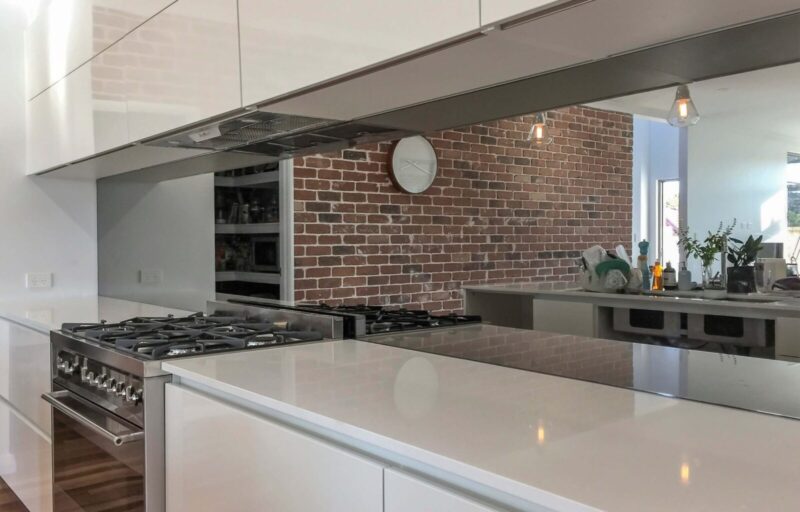
Mirrored glass splashbacks are a striking choice for modern kitchens, offering both visual impact and practical benefits. They reflect light, create the illusion of space, and deliver a sleek, contemporary finish. However, not all mirror glass is suitable for kitchen environments. Understanding toughened mirrors, safety considerations, and ideal placement ensures both style and performance.
What Makes Toughened Mirrors Different

When selecting mirrored splashbacks, toughened mirrors are specifically manufactured to handle heat and impact in high use areas such as kitchens. The toughening process involves heating the glass to a high temperature and rapidly cooling it to increase strength and durability.
Unlike standard decorative mirrors, toughened mirrors are safety rated. If broken, they shatter into small, blunt fragments rather than sharp shards, reducing injury risk. This makes them suitable for installation behind cooktops and sinks, where exposure to heat and accidental impact is more likely.
It is important to note that mirrors must be manufactured as toughened from the beginning. Standard mirrors cannot simply be toughened afterward because the reflective backing would be damaged during the heating process. All measurements, cutouts, and edge polishing must be completed before toughening, as the glass cannot be altered once treated.
Safety Notes For Kitchen Installation
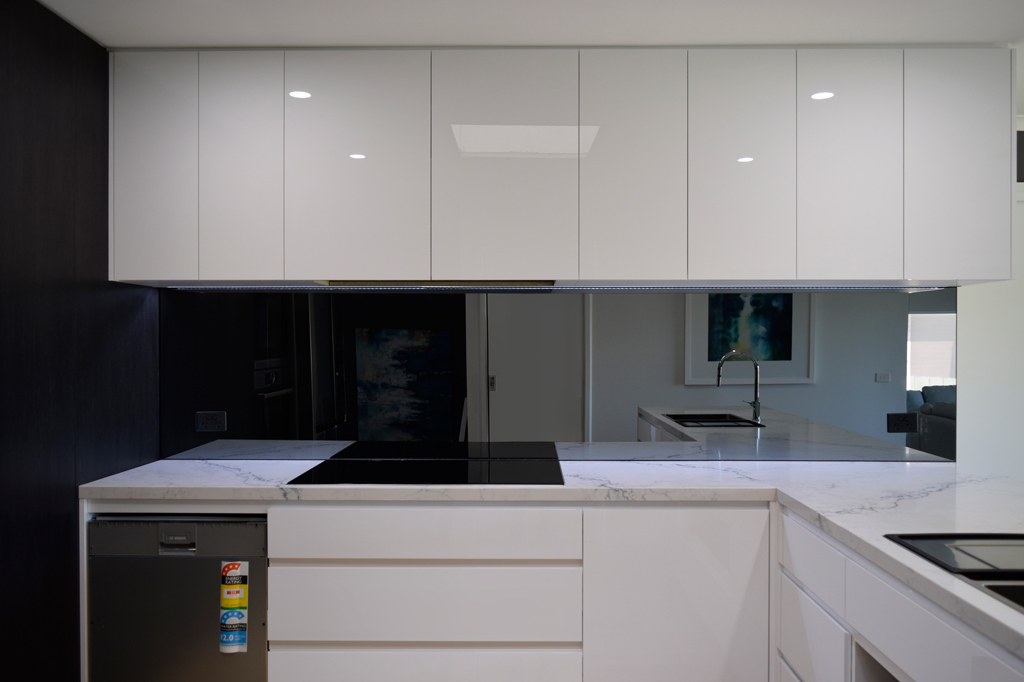
Safety is critical when installing mirrored splashbacks, particularly behind gas cooktops. Always confirm heat clearance requirements with both the appliance manufacturer and the glass supplier. Some high output gas burners may require additional spacing or alternative materials directly behind the flame zone.
Professional installation is strongly recommended. Correct mounting brackets, adhesives, and wall preparation prevent stress points that could lead to cracking. Because mirrored glass reflects everything around it, walls must be level and finished cleanly before installation.
Ventilation also plays a role in long term durability. Proper airflow helps manage condensation and reduces heat buildup behind the glass. Ensuring that installation complies with local building and safety standards protects both the homeowner and the product warranty.
Best Placement For Visual Impact
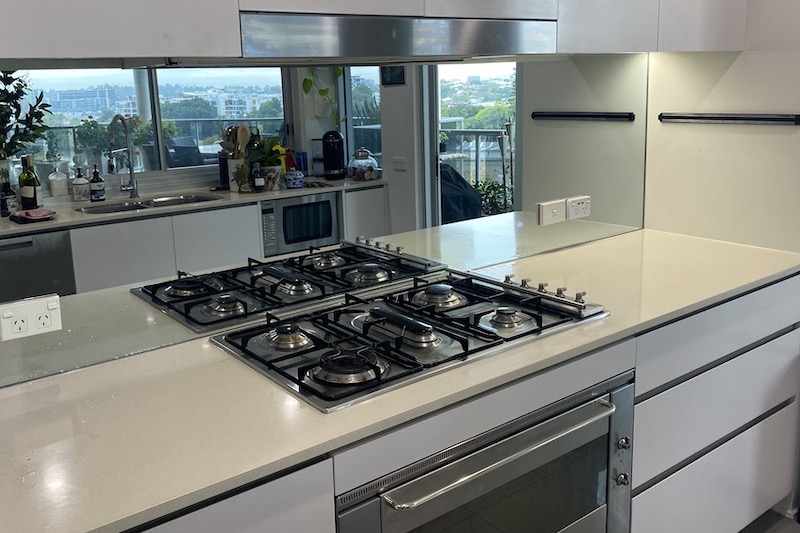
Mirrored splashbacks work especially well in smaller kitchens where maximizing light reflection can make the space feel larger. They are ideal for minimalist interiors, handleless cabinetry designs, and contemporary layouts that emphasize clean lines.
Tinted mirror options such as grey or bronze can soften reflections and reduce glare, making them practical in bright kitchens with strong overhead lighting. Antique mirror finishes are another option, adding texture and character while maintaining reflectivity.
Consider how the mirror will reflect surrounding elements. Placement opposite windows can amplify natural light, while positioning near decorative shelving may create dynamic visual layering.
Conclusion
Mirrored glass splashbacks offer a sophisticated, light enhancing solution for modern kitchens. By choosing purpose made toughened mirrors, following safety guidelines, and planning placement carefully, homeowners can achieve a durable and visually striking result. With proper installation and thoughtful design, mirrored splashbacks become both a practical surface and a standout feature in the kitchen.